Guide for Selecting Payload Robots: How to Scientifically Match Your Automation Needs
Release time: 2025-11-14
In industrial automation, robots are central to boosting efficiency and precision. However, selecting the right robot is often challenging, especially when dealing with the critical parameter of Payload. Choosing the wrong payload capacity can not only waste budget but also lead to unstable performance and reduced machine lifespan.
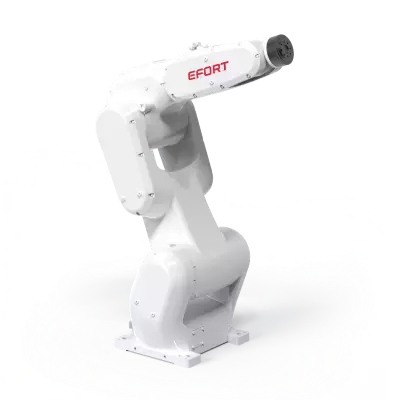
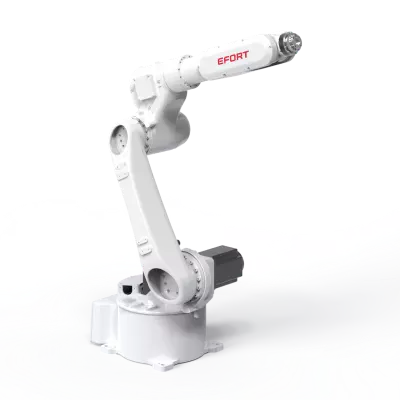
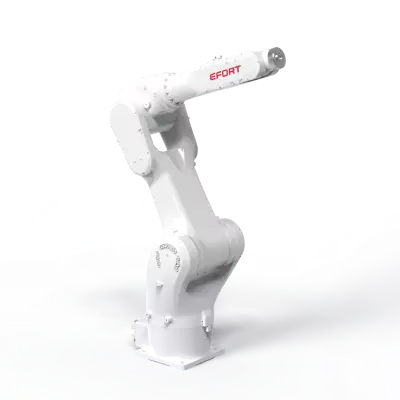
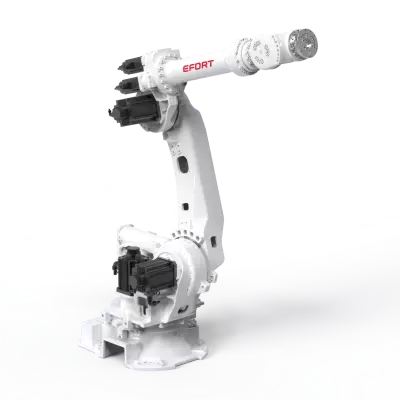
This guide provides a systematic approach, incorporating our company’s Small Payload, Medium Payload, and Large Payload categories, to ensure you precisely match the robot’s capabilities with your actual production requirements.
Understanding Payload Definition and Common Misconceptions
Before diving into selection, we must clarify the true meaning of payload:
1. What is Payload?
Payload refers to the maximum total weight the robot arm can consistently and reliably carry under stable operation conditions.
Payload= Weight of Workpiece + Weight of End Effector + Weight of Additional Cables/Hoses
Supplier Tip: Many customers only consider the “workpiece weight.” In reality, you must include the weight of the End Effector (e.g., grippers, weld guns, screwdrivers, or sensors). This weight can often account for 10% to 40% of the total required payload capacity.
2. Common Payload Selection Mistakes
Misconception
Potential Risk
Selecting based only on maximum capacity
Ignores the impact of speed, acceleration, and cycle time on joint longevity.
Seeking “bigger is better”
Leads to purchasing an oversized robot, resulting in increased energy consumption, larger footprint, and higher cost due to greater inertia and mass.
Ignoring dynamic load
In high-speed motion or frequent start-stop scenarios, the actual torque applied to the joints far exceeds the static load.
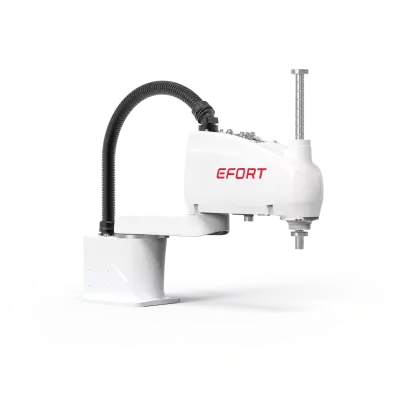
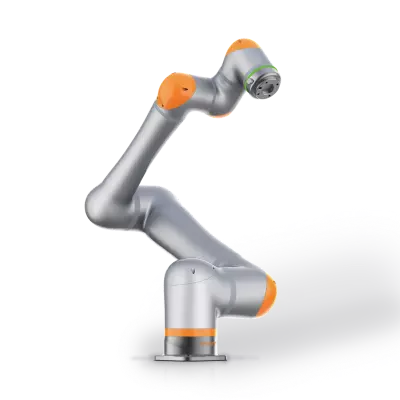
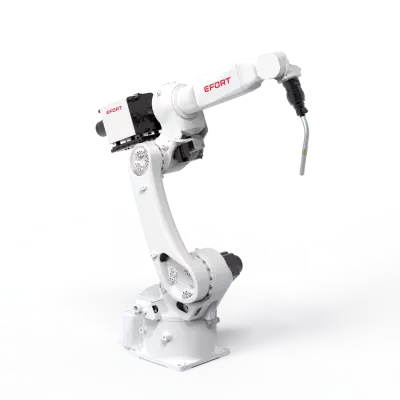
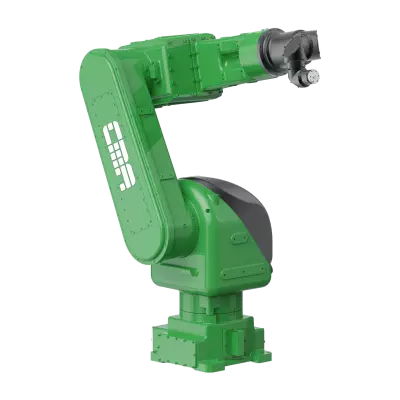
EFORT Robot Payload Classifications and Application Scenarios
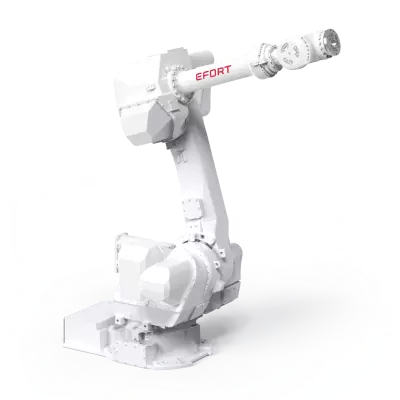
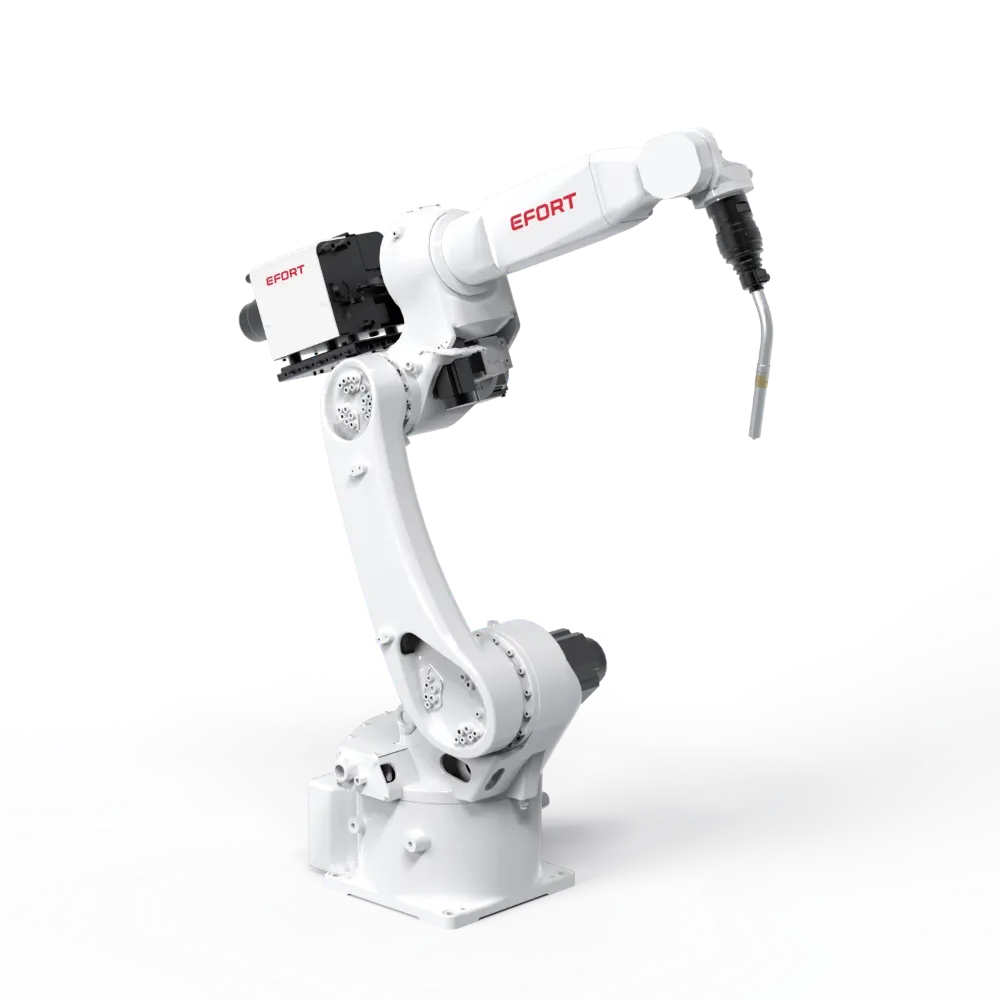
To simplify the selection process for our customers, we divide our robot products into the following three categories. Please use your workpiece weight and application needs for an initial screening:
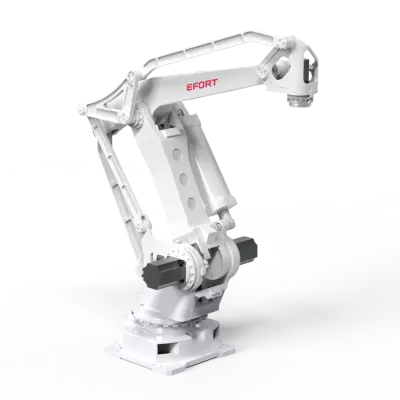
Heavy-duty palletizing (pallet level), handling large stamped parts, car body spot welding, grinding large structural components.
Powerful drive torque and rigid structure; stability and safety are paramount.
Four Core Factors for Selection (In-Depth Analysis)
After determining the approximate payload category, you need to use the following factors for precise selection:
1. Load Weight and Type (Weight & Type)
Precise Calculation: Reconfirm the total weight of your workpiece + end tooling, and use this as your baseline.
Center of Gravity (CoG) Assessment: If the workpiece or gripper CoG is significantly offset from the robot flange center (i.e., high moment arm), it creates additional torque on the joints. For such applications, you must choose a model one level higher than the theoretical load (e.g., if the load is 8kg, consider a Medium Payload robot).
2. Speed and Acceleration (Speed & Acceleration)
Cycle Time Requirements: Shorter cycle times demand higher acceleration and deceleration rates from the robot.
Dynamic Load: During high-speed stops, the inertial force on the robot joints increases instantaneously. Therefore, in high-throughput applications, the actual operating payload must be less than the rated payload to ensure stable running and long-term durability.
3. Accuracy and Repeatability (Accuracy & Repeatability)
Small Payload Advantage: Generally, small payload robots offer superior Repeatability (RP) and path accuracy due to lower self-weight and lower movement inertia, making them suitable for fine-tolerance tasks.
Large Payload Consideration: While large payload robots have strong structural rigidity, their stability at maximum reach must be carefully evaluated for precision tasks.
4. Working Range and Mounting Method (Reach & Mounting)
Reach vs. Payload: A robot’s working envelope and its payload are inversely related. Typically, the longer the reach, the lower the allowable payload at the furthest point. Always refer to the manufacturer’s Payload-Reach Diagram, which is more informative than a single rated payload number.
Mounting Alignment: Different mounting methods (floor, wall, inverted) affect the gravitational forces on the joints. Ensure your chosen robot supports your intended mounting method and that the payload data is tested under that configuration.
Scientific Selection Steps
Follow these three steps for optimal decision-making:
Step
Action Item
Goal and Consideration
Our Classification Match
Step 1: Calculate Static Total Load
Measure the workpiece, determine the end effector weight, and add them together.
Determine the base payload requirement.
Initial lock-in: Small, Medium, or Large Payload.
Step 2: Evaluate Dynamic Margin
Analyze application speed and frequency. For heavy-duty, high-speed, or frequent direction changes, multiply the static load by 1.25 for a dynamic requirement.
Ensure safety margin. Avoid prolonged overloading to extend robot lifespan.
Decide whether to size up one category.
Step 3: Compare Diagram and Finalize
Compare the final dynamic load requirement with our provided Payload-Reach Diagram and confirm the best model that meets the load requirement at your necessary reach.
Lock in the optimal model. Ensure the mechanical structure and performance specifications best match your application.
Determine the final model number.
The Value We Provide
As your robot supplier, we are committed to providing you with professional and reliable automation robots solutions:
Flexible Product Line: Our products precisely cover Small, Medium, and Large payloads, ensuring the best machine for every task, from fine assembly to heavy-duty handling.
Professional Load Analysis: We offer advanced simulation software services to perform a dynamic load analysis based on your working conditions (including speed, path, and tooling), recommending the most cost-effective machine.
Stability and Reliability: Our robots utilize high-precision, high-strength components, guaranteeing long operational life and excellent repeatability under rated load.
Choosing the right payload robot is choosing your productivity. Let us help you succeed.
Contact our technical experts today to customize the perfect payload automation solution for your business!